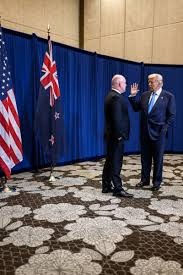
Since his inauguration to office, President Trump has made the somewhat controversial decision to attempt an acquisition of Greenland. This acquisition has been heavily debated between the two political parties, as well as internationally, with some praising it for its strides in the right direction of America’s future and others condemning it as a massive overreach.
“Is it sudden, or is it something that’s been talked about behind the scenes for years, but is now just being active?” history teacher Edward Carr said.
This theory aligns with previous historical interest in Greenland such as the Truman administration’s 100 million dollar offer in 1946 for the country as well as the attempted 1910 land swap by former the U.S. Ambassador to Denmark.
The desire for Greenland makes some sense as well. Carr said the goal of acquisition stemmed from the strategic location as well as the idea of seizing it before China does. Also, the natural resources certainly help.
The acquisition is not all positive though. Carr said the biggest issue question is how the United States will plays on the world stage, both in terms of where we sit with our allies and from a philosophical standpoint: in short, is this a sign of things to come, that the United States is going to become aggressive on these kind of issues?
This acquisition brings to light a plethora of good and bad precedents America could set, whether it is aggressive foreign policy, preventative measures for future wars, or an entire shift in the dynamic between the president and foreign nations.
The only pressing concern that remains is if the Greenland acquisition means more are in works than is publicly known? Historically, America has aimed to acquire Greenland in periods of large scale war. The acquisition in 1910 was four years before World War I, and the attempted acquisition in 1946 was one year after World War 2.

 The Tiger Times
Anonymous
March 9, 2026
I think I could run Greenland