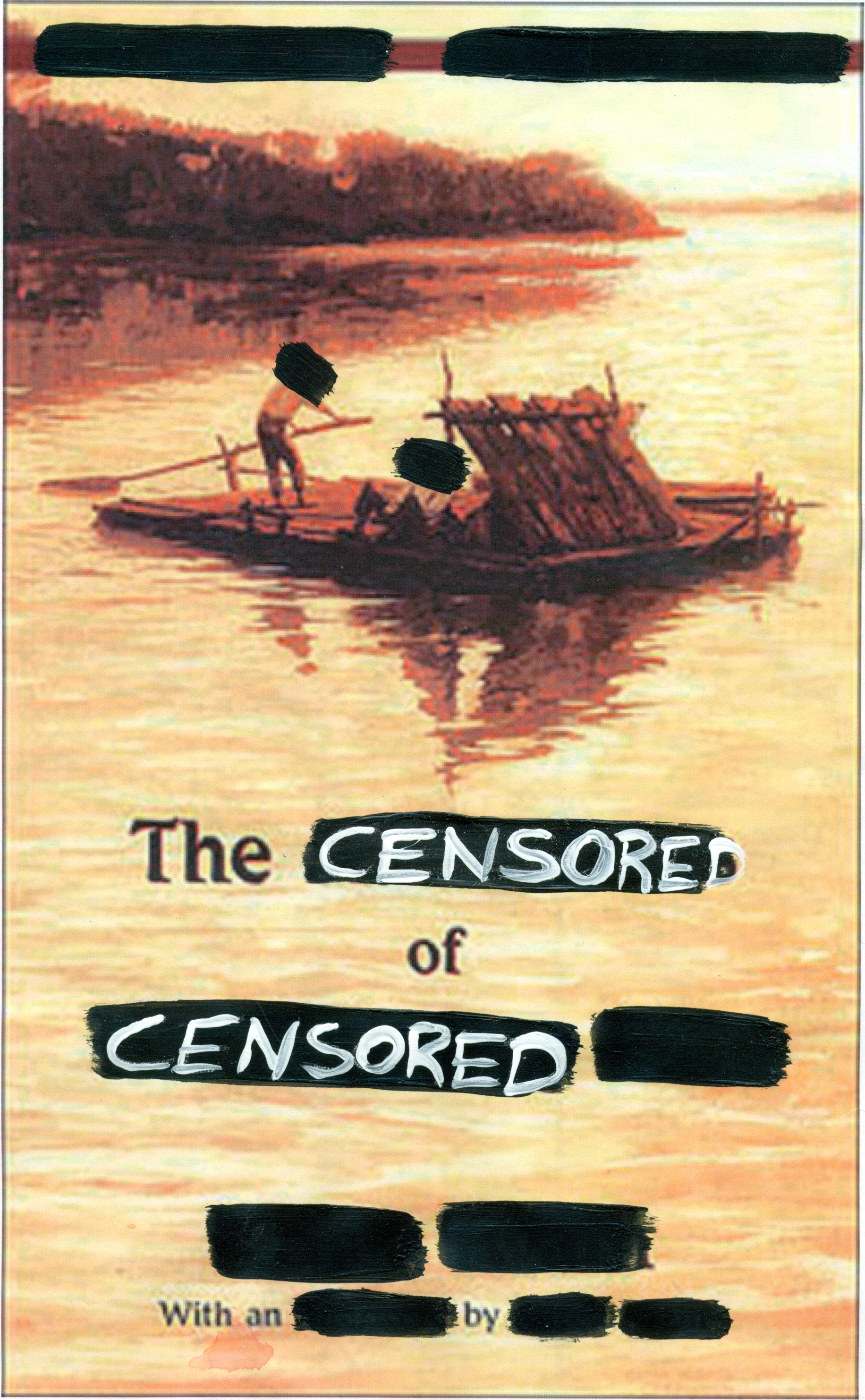
Image by Jess Gieringer
Censorship is something that constantly pervades our society, but when is it truly necessary?
Something that often stirs up controversy is when a book is either censored or simply banned in a school so that it may protect impressionable youth from topics considered too mature for them. In this modern society of political correctness, many books that have been taught in schools for decades are either being banned or replaced with censored copies of the books because they contain controversial topics or offensive themes or language.
One such victim of this is Mark Twain’s classic, The Adventures of Huckleberry Finn. A copy was released in which all 217 instances of the “n-word” had been removed and replaced with the word “slave” so that it would not offend anyone who read it. Twain, however, was a professed abolitionist who used the word intentionally to provoke thought about why a good boy like Huck Finn, who befriends and helps assist in the runaway of a slave, would use such language.
“The sanitized version would be fine for, say, eighth graders who might laugh because they don’t understand the intended usage of the word,” Fleetwood English teacher Deb Mahnken said, “but for students in eleventh grade who are mature enough, in most cases, to drive, there should be no issue interpreting and discussing the usage in class.”
Fortunately, at Fleetwood we suffer from very little limitations on the books that are taught here.
“All the books that we teach have been banned in other districts.” Mahnken said.

 The Tiger Times
Posted on March 26, 2012 by thetigertimes4
0